Evidence captured where cancer care decisions actually happen
OncoLens captures the clinical reasoning behind a decision, not just the decision itself, giving HEOR and RWE teams evidence that claims data and structured EHR fields alone cannot reach.
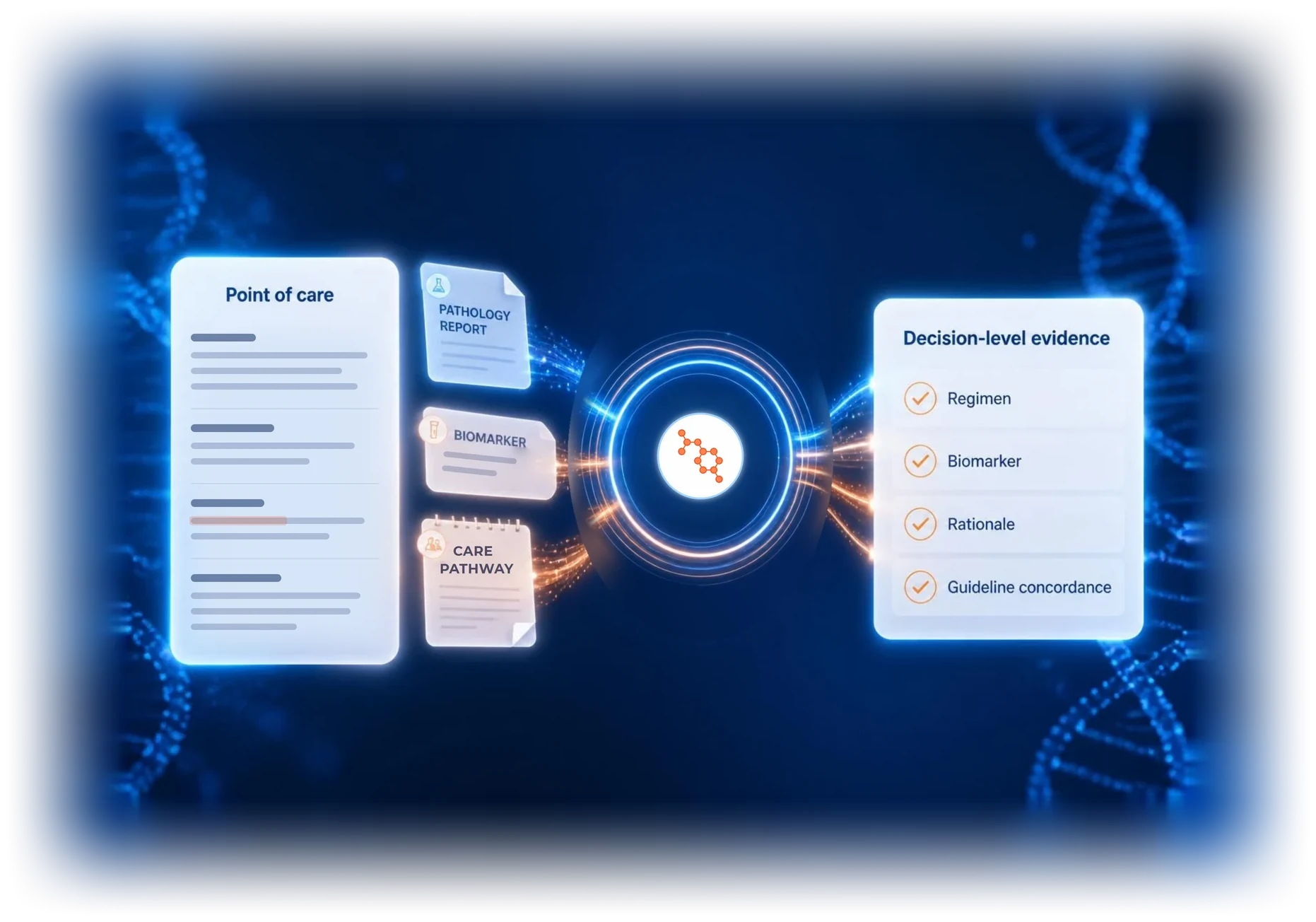
How OncoLens helps
Four capabilities, one evidence layer.
OncoLens runs oncology treatment pattern and practice variation studies
- OncoLens captures regimen selection, sequencing, and decision rationale as they are made
- That capture happens in tumor boards and planning sessions, across community and academic sites alike
- Outcomes come from that same data, so you see what those decisions led to
OncoLens measures guideline adherence and divergence in real-world care
- OncoLens measures against Elsevier’s ClinicalPath guidelines as the reference standard
- The data shows how closely treatment decisions follow evidence-based pathways
- It also shows where they diverge, at the point of care
OncoLens extracts unstructured oncology data at scale
- That detail is invisible to claims data and most structured EHR fields
- An estimated 88%+ of clinically meaningful detail sits in unstructured notes and pathology reports
- OncoLens extracts and structures that layer at scale, across EMR systems
OncoLens informs oncology trial design with real-world evidence
- OncoLens supplies real-world data on treatment patterns, biomarker prevalence, and site-level patient volume
- That data informs eligibility criteria, feasibility assessment, and site selection
Where OncoLens captures evidence
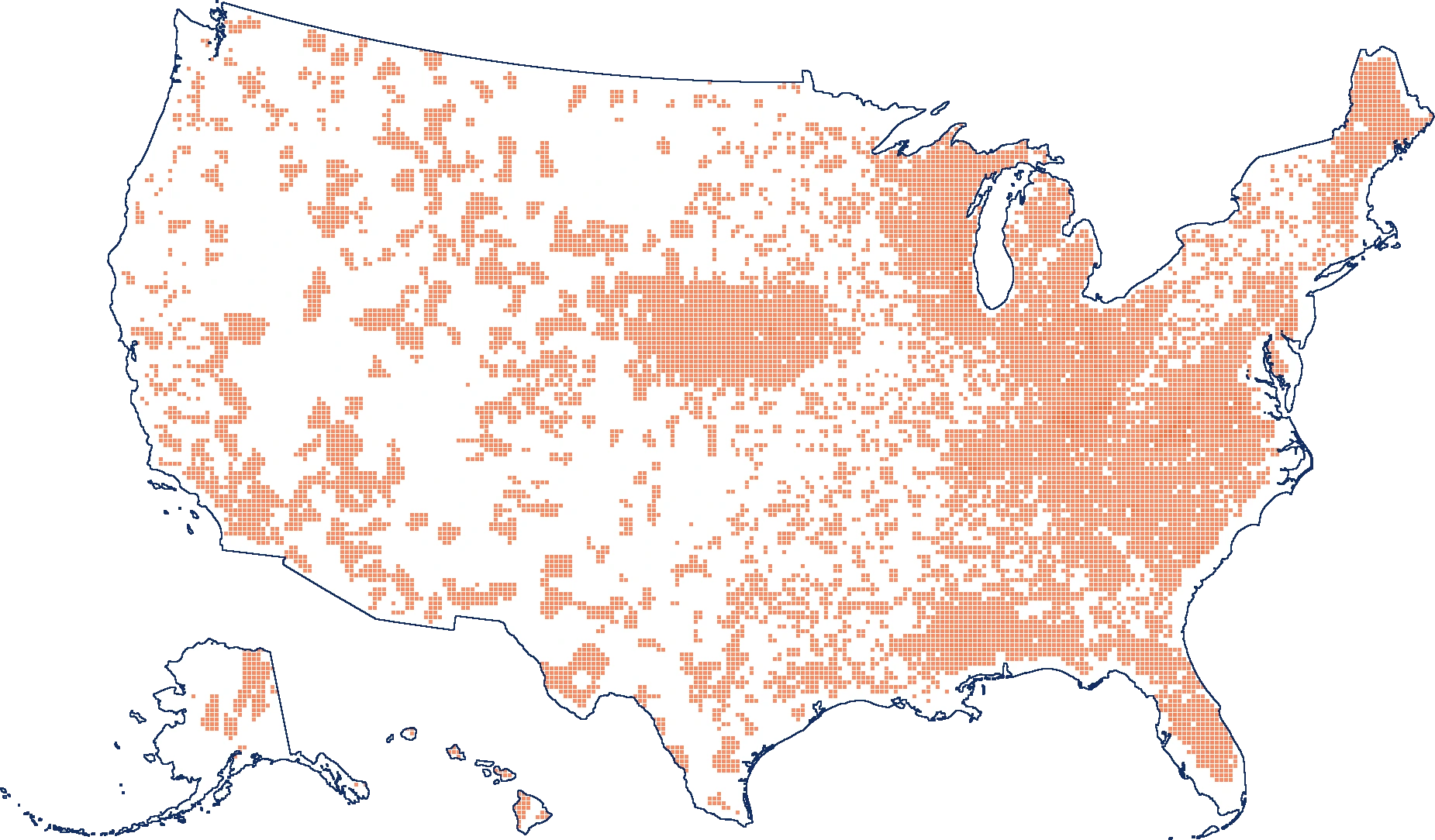
Four data sources across the care pathway, resolved into one oncology patient record.
88% of actionable clinical data points came from unstructured sources: narrative notes, pathology reports and radiology impressions, out of reach of claims and structured fields. OncoLens extracts it at scale.
Frequently asked questions
What makes OncoLens’s real-world evidence data different from other oncology RWE sources?
Most real-world data is captured after the fact, from claims or structured EMR fields alone. OncoLens captures data at the point of actual clinical decision-making, including tumor boards, treatment planning sessions, and biomarker ordering, across a heavily community-weighted provider network, linked with EMR and lab data. That gives HEOR and RWE teams visibility into the clinical reasoning behind a decision, not just its outcome.
How does OncoLens support treatment pattern and practice variation research?
Because OncoLens captures decisions as they happen at the point of care across a broad community oncology network, it can surface how treatment selection actually varies by site, provider, or patient subgroup, grounded in the clinical rationale documented during real decision-making rather than what was ultimately billed or coded.
Can OncoLens data show guideline adherence and divergence, not just utilization?
Yes. OncoLens analyzes treatment decisions against Elsevier’s ClinicalPath guidelines to identify where care aligns with or diverges from established pathways, and in what clinical contexts divergence occurs. That is a structured way to quantify guideline adherence rather than inferring it from claims-based proxies alone.
How does OncoLens unlock data that’s typically hidden in unstructured clinical notes?
An estimated 88%+ of clinically meaningful detail in oncology patient records sits in unstructured text, including physician notes, tumor board discussions, and biomarker rationale, which standard structured-data extraction misses. OncoLens is built to extract and structure this data at scale across EMR systems, surfacing clinical detail that would otherwise remain locked in free text.
How can OncoLens’s real-world data inform clinical trial design?
By combining point-of-decision treatment data, biomarker ordering patterns, and guideline adherence analysis across a community-weighted network, OncoLens gives trial teams a clearer picture of how patients are actually identified, tested, and treated in practice. That is real-world context that can inform eligibility criteria, site selection, and protocol design.
Explore other audiences
OncoLens supports teams across the life sciences organization.
Commercial
Unparalleled reach across outpatient and inpatient oncology care.
AudienceClinical Development
Reduce uncertainty from feasibility through enrollment.
AudienceCROs and Biobanks
Scale at your fingertips through engaging a singular, diverse network.
AudienceMarket Access and Data Insights
Where real-world care diverges from guidelines.
See what’s hidden in the other 88%
Talk to the OncoLens team about treatment pattern studies, guideline concordance benchmarking, or unstructured-data extraction for your next protocol or publication.