Guideline divergence, quantified
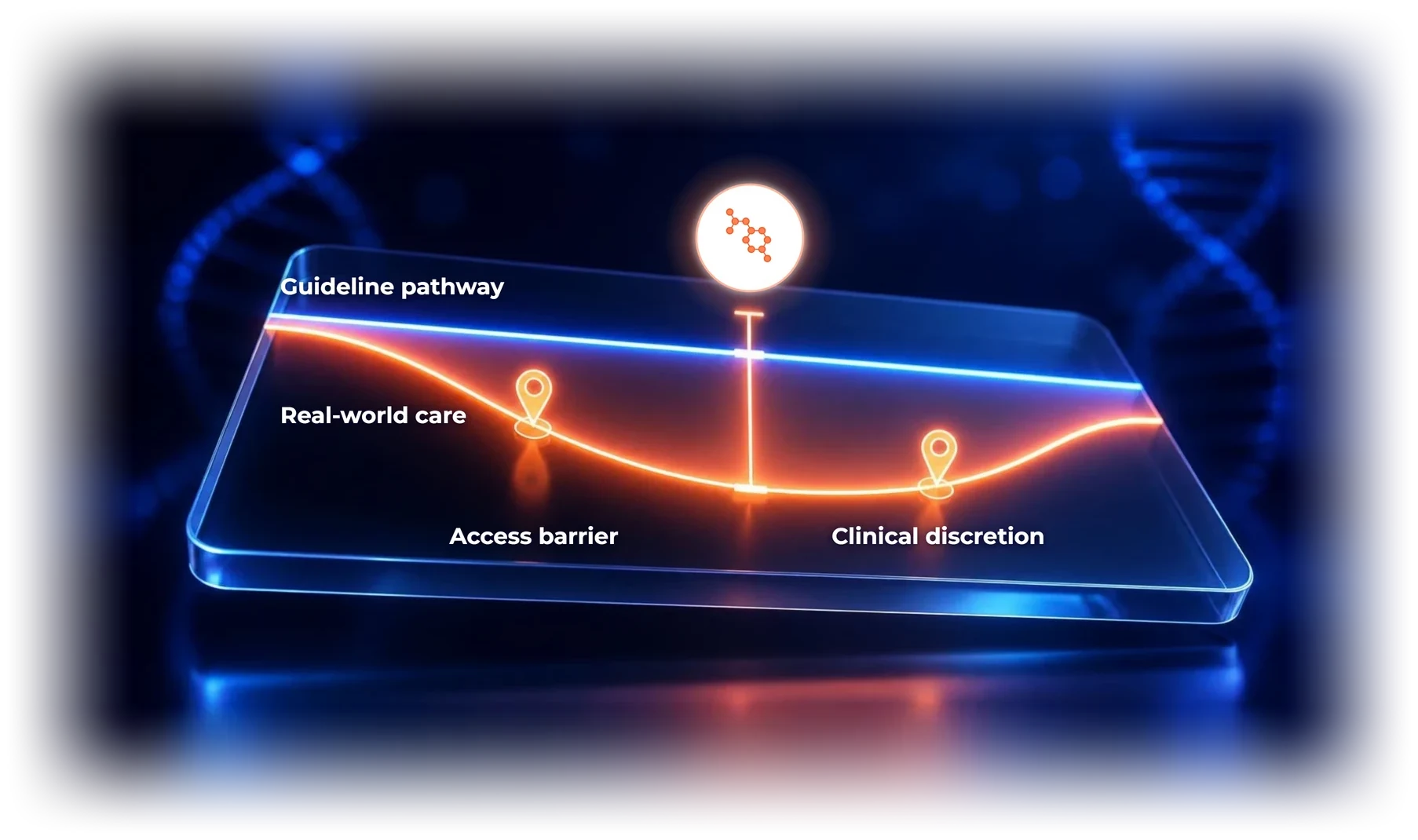
Backed by a CMS-recognized, ASCO-approved guideline standard, OncoLens turns the gap between real-world care and evidence-based pathways into evidence your payer, value, and field teams can act on.
How OncoLens helps
Backed by OncoLens’ partnership with ClinicalPath from Elsevier, a CMS-recognized evidence pathway and ASCO-approved quality guideline.
OncoLens builds guideline-backed evidence for payers
- Gather the evidence payer and value teams need for their dossiers
- Cite it directly in negotiations, measured against a recognized standard
OncoLens separates coverage barriers from clinical discretion
- See where divergence reflects coverage barriers and where it reflects clinical discretion
- Sharpen targeting for value-based and outcomes-based contracts
OncoLens sharpens targeting for field, medical affairs, and policy
- Deploy field and medical affairs teams with more precision
- Strengthen policy and payer engagement with third-party-validated evidence
Frequently asked questions
What is “guideline divergence” and why does it matter for market access and payer strategy?
Guideline divergence is the measurable gap between how oncology care is actually delivered and what evidence-based pathways recommend. Quantifying it, through OncoLens’s partnership with Elsevier’s ClinicalPath, a CMS-recognized evidence pathway and ASCO-approved quality guideline, turns a qualitative impression into real-world evidence that payer and value teams can cite directly in dossiers and negotiations.
How can this data support payer and value dossiers?
Because ClinicalPath is CMS-recognized and ASCO-approved, guideline concordance data drawn from it carries credibility that generic real-world data sources may lack in payer conversations, giving value and access teams a defensible, third-party-validated evidence base for formulary, coverage, and reimbursement discussions.
Can this data distinguish access barriers from clinical behavior?
Yes. Comparing actual treatment patterns against guideline pathways helps separate cases where care diverges due to structural or coverage barriers from cases reflecting physician discretion, a distinction essential for targeting the right intervention, whether policy engagement or field education.
How does guideline divergence data improve value-based and outcomes-based contracting?
Value-based and outcomes-based contracts depend on knowing where and why care varies from expected pathways, since that variation affects outcomes measurement and risk. Quantified guideline divergence sharpens targeting for these contracts by identifying the patient populations and practice patterns most likely to affect contract performance.
How does this data help field and medical affairs teams?
Field and medical affairs teams need precision on where clinical practice diverges from guidelines to prioritize outreach and scientific engagement effectively. Guideline divergence data adds that precision, helping teams focus deployment where it will have the most impact on aligning care with evidence-based pathways.
Explore other audiences
OncoLens supports teams across the life sciences organization.
RWE and HEOR
Data captured at the point of clinical decision-making, not just claims.
AudienceCommercial
Unparalleled reach across outpatient and inpatient oncology care.
AudienceClinical Development
Reduce uncertainty from feasibility through enrollment.
AudienceCROs and Biobanks
Scale at your fingertips through engaging a singular, diverse network.
See where your guideline meets real-world care
Bring your pathway and OncoLens will show you where practice concords, where it diverges, and what that means for your evidence strategy.