Get scale at your fingertips
Whether you’re identifying sites and patients for a sponsor or sourcing hard-to-find biospecimens, OncoLens gives CROs and biobank teams the same community-weighted reach, and the data behind it.
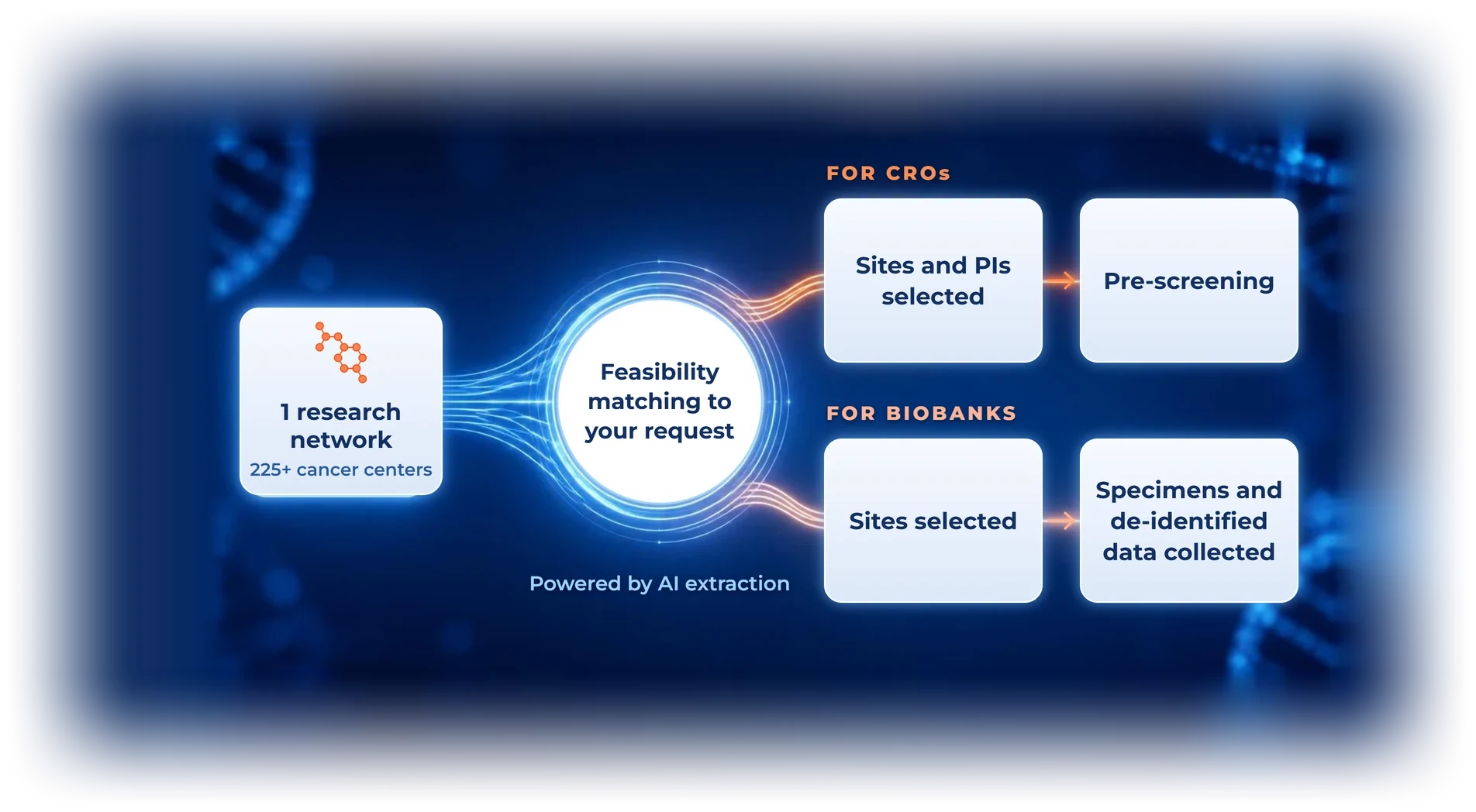
How OncoLens helps
Two audiences, one network.
OncoLens identifies trial-ready sites and pre-screens patients
- OncoLens covers 225+ sites, 90% community-based, Phase 1 to Phase 3 compatible
- Feasibility-based connections and introductions go directly to centers and PIs
- Paired with oncology-focused AI pre-screening
- Turnkey dashboards, personalized alerts, and analytics on eligibility and declines come back to you
OncoLens sources hard-to-find oncology biospecimens with context
- OncoLens fulfills hard-to-source biospecimen needs through the same research network
- Collections are enriched with underlying de-identified patient data
- None of it exposes patient identity
What you receive
Two deliverables out of one network, each with the data behind it.
Feasibility results
- 1Sites and PIs matched to your protocol
- 2Feasibility-based introductions
- 3Pre-screened patient matches
- 4Eligibility and decline analytics
Specimen manifest
- 1Hard-to-source biospecimens
- 2De-identified patient data
- 3Diagnosis and treatment history
- 4Sourced across the same network
88% of actionable clinical data points came from unstructured sources: narrative notes, pathology reports and radiology impressions. OncoLens AI extracts it, so it’s part of every match and every manifest you receive.
Frequently asked questions
How does OncoLens help CROs identify oncology trial sites faster?
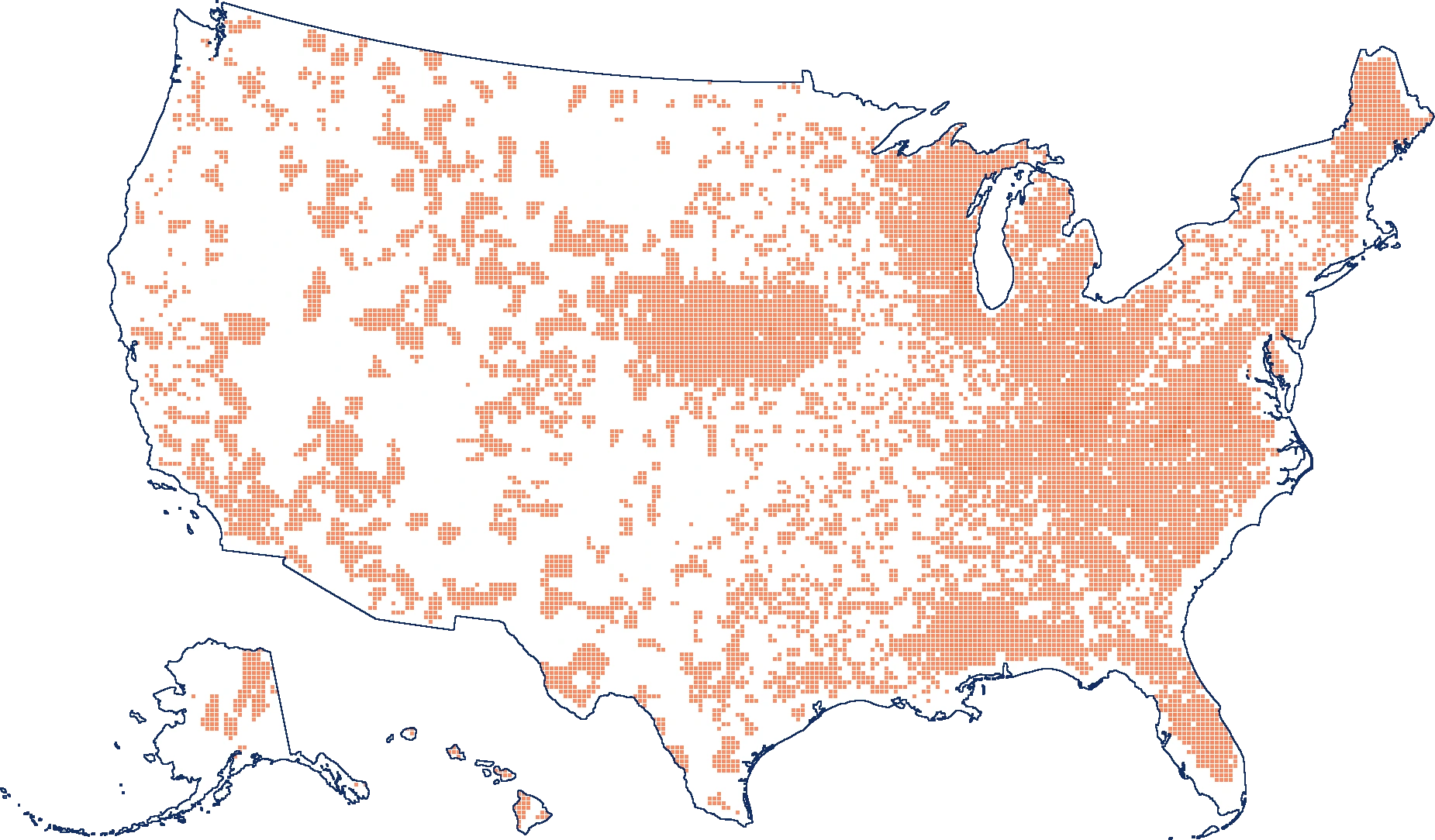
OncoLens connects CROs and sponsors to the OncoLens Research Network, spanning 225+ cancer center locations with roughly 90% community-based reach, supporting Phase 1 through Phase 3 studies. Teams get feasibility-based connections and introductions to the centers and PIs most likely to fit a given protocol, shortening the path from site identification to activation.
What does “feasibility-based” site selection mean at OncoLens?
Rather than surfacing a generic directory of investigator sites, OncoLens matches centers and PIs based on demonstrated fit for a specific protocol and patient population, then facilitates the introduction directly, so outreach time goes toward sites with a real chance of enrolling.
How does OncoLens’s AI patient pre-screening work?
OncoLens’s oncology-focused AI reviews patient data against trial eligibility criteria and presents likely candidates through turnkey dashboards, with personalized alerts as new matches emerge. A human is always in the loop to confirm eligibility, and teams get analytics on eligibility and decline trends.
Can OncoLens help translational medicine and biobank teams source hard-to-find biospecimens?
Yes. The OncoLens Research Network‘s reach across 225+ cancer center locations, most of them community-based, gives biobank teams a path to specimen types that are difficult to source through a single institution or a narrow academic network.
What data comes with biospecimens sourced through OncoLens?
Biospecimens sourced through the OncoLens Research Network can be paired with de-identified patient data from that same network, giving translational teams clinical context, such as diagnosis and treatment history, behind each sample, without exposing patient identity.
Explore other audiences
OncoLens supports teams across the life sciences organization.
RWE and HEOR
Data captured at the point of clinical decision-making, not just claims.
AudienceCommercial
Unparalleled reach across outpatient and inpatient oncology care.
AudienceClinical Development
Reduce uncertainty from feasibility through enrollment.
AudienceMarket Access and Data Insights
Where real-world care diverges from guidelines.
Scale your next sponsor engagement or specimen request
Share what you’re sourcing, whether sites, patients, or specimens, and OncoLens will show you what the network already has.