Author: Mirjana Phillips

OncoLens Celebrates the CoC’s 100th Anniversary

This coming year, the American College of Surgeons (ACS) Commission on Cancer (CoC) will observe its 100th Anniversary. The yearlong campaign will celebrate this important milestone, honor the dedication and leadership of those who have helped to build and shape the CoC, and identify new opportunities to improve the care of the patient with cancer.

“Over the past century, the organizations and individuals represented in the CoC have consistently and tirelessly advanced the quality and standards of cancer care,” said CoC Chair Timothy Mullett, MD, FACS. “As a result, today there are more than 1,500 CoC-accredited cancer programs in the United States and Puerto Rico, treating more than 70 percent of patients with cancer in this country.”

Established by the ACS in 1922, the CoC is a consortium of professional organizations, dedicated to improving survival and quality of life for cancer patients through standard-setting, prevention, research, education, and the monitoring of comprehensive quality care. CoC membership is composed of more than 100 individuals who either are surgeons representing the ACS or representatives from the 60 national professional organizations affiliated with the CoC.

“Since 1922, the CoC has been setting standards and accrediting cancer programs to ensure the provision of high-quality cancer care,” said ACS Cancer Programs Medical Director Heidi Nelson, MD, FACS. “While we celebrate the CoC’s proud 100-year history of excellence in the coming year, we also will continue to focus on new, innovative, evidence-based approaches for developing compassionate, standardized care that is coordinated to treat the whole patient.”

Throughout the year, the CoC will feature special 100th Anniversary content in the Cancer Programs News weekly newsletter, on ACS Cancer Programs social media channels, and on the new 100th Anniversary website. Anniversary coverage will include video interviews with past and present CoC leadership, historical articles and photos, profiles of long-running accredited programs and member organizations, reviews of medical journal articles that highlight the importance of National Cancer Database data, and bylined articles on topics of interest to the cancer care community. In addition, the January 2022 issue of the Bulletin of the American College of Surgeons will be dedicated to the CoC’s 100th Anniversary.

Results of a Multi-State, Multi-Institution Implementation of a Multidisciplinary Conference Quality Measurement Tool

In 2006, the American Society of Clinical Oncology (ASCO) and European Society for Medical Oncology (ESMO) defined the delivery of multimodality treatment by a multidisciplinary team of appropriately skilled health professionals as an essential component of quality cancer care. Subsequent research shows that Multidisciplinary Conferences are associated with improved survival in breast, head and neck, ovarian and colorectal cancers. Despite these advantages, health care systems struggle to implement and sustain Multidisciplinary Conferences due to the heavy burden imposed by the required work processes.

To understand the quality impacts of a multidisciplinary cancer care approach, we collected metrics including cancer characteristics, care team utilization metrics, average attendance, quality metrics collected for accreditation, and clinical trials from 46,000 patient cases and 9,000 care providers.

Through this work, we found that:

  • An average of 18 people attended each conference, which included representation from Medical Oncology, Radiation Oncology, Surgery, Pathology, and Radiology
  • Process improvements delivered by the implementation of a multidisciplinary cancer care platform resulted in a 65 to 90 percent drop in the time spent for case preparation

Quality outcomes were measured by the number of cases discussed per session, patient access to a multidisciplinary discussion, and physician engagement. From baseline and across providers, we measured:

  • A 33 percent increase in the number of cases discussed per session
  • A 50 percent increase in patient access, and
  • A 50 percent increase in engagement per month

Looking at a single system, we measured:

  • An average of 5 referrals per 10 cases
  • An increase of approximately 3,000 additional analytic cases above baseline over the evaluation period, and
  • An increase of $1.5M in net revenue over the evaluation period

Complete our quick form to download and read the full research abstract, which was presented at the 2021 ASCO Quality Symposium.

Time-Saving Opportunities through Tumor Board and Cancer Registry Integration

The American College of Surgeons (ACS) and the Commission on Cancer (CoC) advocate for concurrent abstracting and more timely submissions, but cancer programs, specifically registry teams, struggle to find innovative ways to meet this demand.

Dauphne McGavic, RN, MSN, CTR, Director of Oncology Accreditation & Support Svcs, Ascension St. Thomas, and her team worked with OncoLens to test integration with the CRStar Cancer Registry solution. The solution leverages OncoLens tumor board data to accelerate reportability and case finding, and support the registry’s broader data and abstraction concurrency objectives.

Findings point to a reduction in case finding time by an average of 40 percent and a “Ready to Abstract” percentage of more than 80 percent.

Complete our short form to download a complete copy of “Time‑Saving Opportunities through Tumor Board and Cancer Registry Integration.”
Molecular testing in the community oncology setting

Molecular Testing in the Community Oncology Setting

Course Description

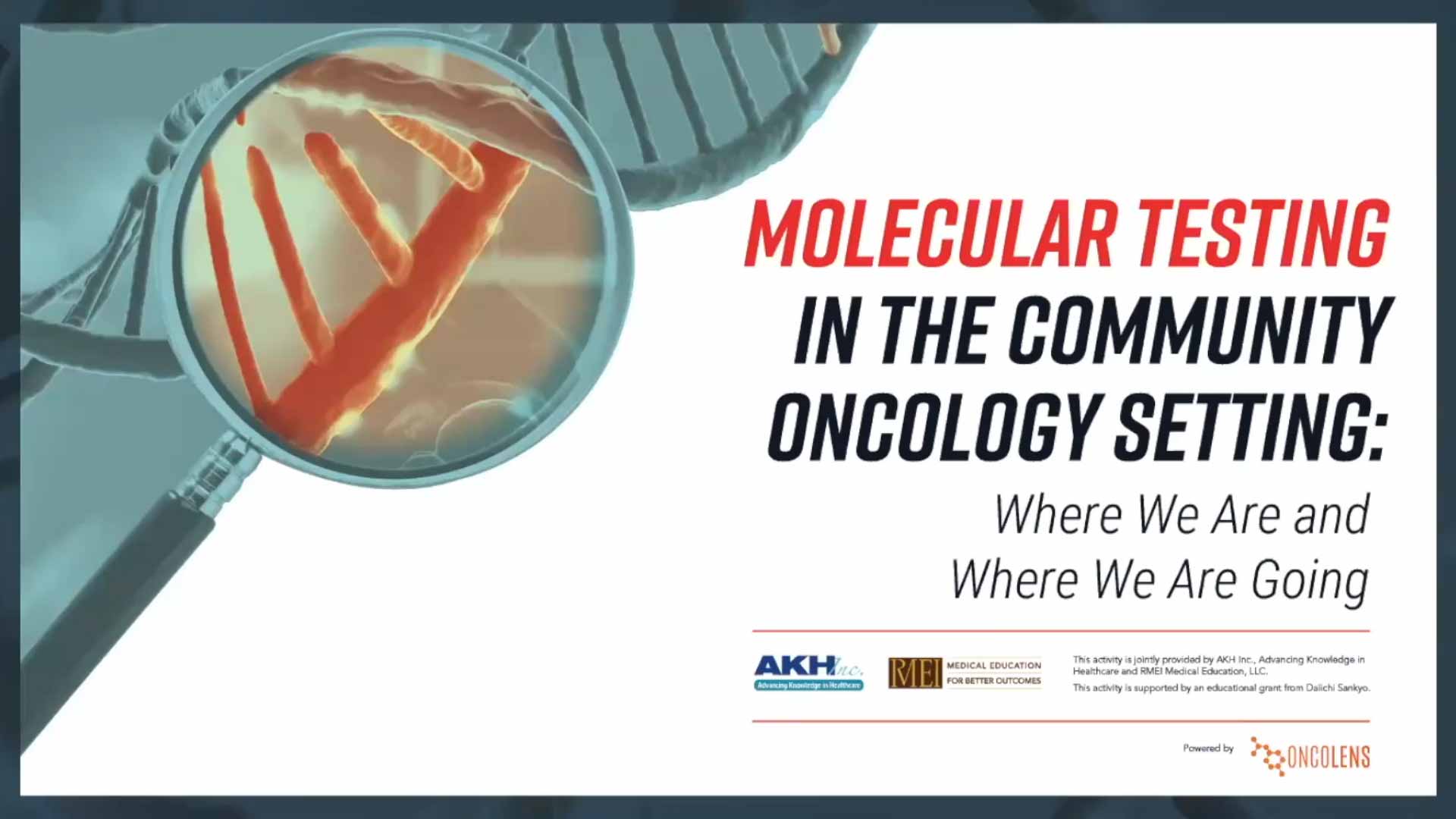
Maria E. Arcila, MD of Memorial Sloan Kettering Cancer Center, shares best practices for biomarker testing in breast, non-small cell lung, and gastric cancer. The content includes important case scenarios and expert guidance on overcoming common testing barriers in the community oncology setting.

Fast-Growing Oncology Startup OncoLens Secures $7.25 Million Series A Funding

OncoLens, a pioneer in tumor board and cancer treatment planning solutions, announced today that it has raised a $7.25 million Series A investment from BIP Capital, Martin Ventures, and SeedToB Capital, a new healthcare artificial intelligence (AI) venture fund launched by former Jvion Co-founders Shantanu Nigam and Ritesh Sharma.

OncoLens brings collaborative and personalized treatment planning to the cancer patient through data integration and decision support. It helps cancer programs and their multidisciplinary teams of specialists collaborate effectively while easily aggregating patient-specific data in a HIPAA-compliant manner across different EMR/clinical/genetics information systems. Patient-specific clinical trials at a facility or its affiliates, NCCN/ASCO guidelines, and the latest research are also automatically identified for each case to support the care team in making the best decision for the patient.

“The new investment round will enable us to further capitalize on our position as a leader in the tumor board and cancer treatment planning software industry,” said Anju Mathew, CEO of OncoLens. “We’re excited to continue our work with BIP Capital and our new investors Martin Ventures and SeedToB Capital. Their combined deep expertise in healthcare and AI will help catalyze both our product development and market expansion efforts.”

OncoLens is being used or implemented across several National Cancer Institute-designated Cancer Centers and some of the largest U.S. healthcare delivery networks. The company has received significant market recognition, with studies showcased in the Association of Community Cancer Centers’ Oncology Journal, Journal of Registry Management, American Society of Clinical Oncology, and others.

“We were an early investor in OncoLens and we’re proud of its rapid growth and commitment to improving healthcare through technology,” said Mark Buffington, co-founder and CEO of BIP Capital and lead investor of its growing portfolio of Healthcare IT investments. “We’re confident OncoLens will increasingly become part of the new norm in terms of how care providers collaborate efficiently and effectively with one another.”

“OncoLens is enabling better outcomes for cancer patients,” said Devin Carty, CEO of Martin Ventures. “The need for new, cutting-edge technologies has never been more important to ultimately winning the fight against cancer. We are excited to partner with Anju and the rest of the OncoLens team to extend and expand clinical trials, precision medicine, and multidisciplinary care to cancer patients.”

“Tumor boards and care collaboration are within a space needing much innovation,” said Shantanu Nigam, managing partner of SeedToB Capital. “OncoLens is stepping up and leading this charge with a very innovative approach under stellar leadership. We’re extremely excited to welcome OncoLens to our portfolio.”

The funding announcement comes during a week when many healthcare investors and innovators are attending the 39th Annual J.P. Morgan Health Care Conference virtually (social media hashtag #JPM21). A focal area of the event is telemedicine and virtual collaboration tools to help healthcare providers better meet the needs of patients in a mobile and digitally connected world.
In 2020, OncoLens was named among the top 10 most innovative companies by the Technology Association of Georgia. OncoLens currently serves more than 8,000 cancer care providers across the country.

About BIP Capital

BIP Capital is recognized as one of the most active venture investors in the Southeast, serving entrepreneurs, investors, and operators to grow the emerging company ecosystem. It applies experience and process to make investment decisions and operational recommendations, allowing its portfolio companies to achieve and stay on a glide path of growth. Areas of focus include Enterprise SaaS, Healthcare IT, Digital Media, Dev Tools, and MarTech. For more information, visit www.bip-capital.com or follow BIP Capital on LinkedIn or Twitter @BIPCapital.

About Martin Ventures

Martin Ventures is a healthcare-focused venture capital firm based in Nashville, Tennessee. Martin Ventures was founded by healthcare operator, investor, and entrepreneur Charlie Martin. Martin Ventures focuses on both building and launching de novo companies and investing time, energy, and capital into world-class entrepreneurs’ leading growth-stage companies. For more information, visit www.martinventures.com.

About SeedToB Capital

SeedToB Capital primarily focuses on artificial intelligence initiatives within healthcare. Most applications of AI in healthcare have results in pilot settings, but fail to scale successfully despite huge investments. SeedToB’s unique approach is to help entrepreneurs navigate this complex space toward the most efficient path to Series B and ultimately, company success. It is led by Ritesh Sharma and Shantanu Nigam, serial entrepreneurs who founded Jvion and quickly grew it to be the nation’s largest clinical AI company.

About OncoLens

OncoLens is a care treatment planning platform designed to help cancer programs collaborate effectively with multidisciplinary teams across their care networks and within the affiliates and communities they serve. Our solutions include virtual tumor board technology, workflow automation, survivorship care planning, and clinical decision support capabilities that lead to increased standardization across the network, higher quality of care, enhanced engagement with affiliates, and reduced costs through greater efficiencies. For more information on OncoLens, please visit www.oncolens.com. Follow us on Facebook, Twitter, and LinkedIn.

Media Contact:
Kathy Berardi
Carabiner Communications
kberardi@carabinercomms.com
678.644.4122

SOURCE OncoLens
Related Links
http://www.oncolens.com

Great Lakes Health System of WNY

Best Practices: Building the Future of Multidisciplinary Cancer Care

GREAT LAKES HEALTH SYSTEM EMPOWERS RESIDENTS AND GRADUATE STUDENTS AT THE UNIVERSITY AT BUFFALO WITH A FIRST-HAND LOOK AT COLLABORATIVE CANCER CARE OF THE FUTURE

Tumor Boards were a part of life for those at Great Lakes Health System, which included six hospitals, multiple care sites and the University at Buffalo School of Medicine and Biomedical Sciences. However, physician participation was often low due to the distance physicians and specialists had to travel to participate in person. The remote connection tools being used were wrought with technical challenges. Graduate students and residents also struggled to participate due to their hectic class and study schedules.

The process of preparing for and conducting tumor board conferences was extremely time-consuming and cumbersome, which ultimately limited the health system’s ability to expand their tumor board conferences and limited the patient’s opportunity to benefit from multidisciplinary discussions of their cases. Michele Hubert-Fiscus, Cancer Conference Director at Great Lakes Health System, described the entire process as a nightmare.

“We had to collect images, reports, documents and other information from all of the different groups. Then, we had to pull together a PowerPoint presentation, making sure it was well-organized and that we didn’t put too much information on one screen so everyone could easily see it,” said Hubert-Fiscus. “With our previous tools, each participant would struggle to share their screen when it came time for them to speak. The permission-based hand-off for screen sharing was disruptive and wasted valuable physician time.”

PROFILE AT-A-GLANCE

Great Lakes Health System is the largest healthcare network in Western New York, managing Erie County Medical Center Corporation and five Kaleida Health Hospitals, multiple medical centers and home care service providers, and the University at Buffalo’s School of Medicine and Biomedical Sciences world-renowned research capabilities. The team holds 14+ tumor boards per month with an average of 20 participants per conference.

When the health system decided to increase the frequency and number of its tumor board conferences to create more opportunities for patients to benefit from collaborative care, the administrative team turned to OncoLens, which has been running successfully at one of their hospitals in Buffalo.

Hubert-Fiscus and her team initially started using the treatment planning platform to reduce the amount of time and manual effort associated with preparing for the tumor boards. All the information needed on each case could be placed in one central, online location. The system told everyone exactly what information was required and when. As the system is web-based, any authorized person can access and post information from anywhere, at any time.

THE IMPACT OF COVID

When the COVID-19 crisis hit in March of 2020, it seemed as though all their progress in managing tumor boards would be stopped in its tracks. The quarantine and social distancing rules could have deterred physicians from getting together in person. When OncoLens offered no cost usage of its virtual tumor board capabilities to aid care teams during the pandemic, Hubert-Fiscus knew it was the right time to give it a try.

“I was nervous. I wasn’t sure we were going to keep our tumor boards going through the lockdown. When we received the notification from OncoLens about their offer to try their virtual tumor board technology, we signed up right away. I had training for one week, and the following week we went live. We were able to get 40 providers along with our pathology and radiology team up and running. We ended up not missing any of our tumor boards due to COVID, and we haven’t missed one since,” added Hubert-Fiscus.

When asked how she made it happen so quickly, she said, “For me, it came down to both the software being so easy to use and the customer support team being so great. The OncoLens team has been amazing every step of the way. They even joined our tumor boards just in case we needed any technical assistance. We requested a few changes, and they quickly made the adjustments. The support has been phenomenal.”

THE EVIDENCE OF SUCCESS: GROWING PARTICIPATION IN TUMOR BOARDS

Going virtual has opened the Great Lakes Cancer Care Collaborative tumor board conference to more physicians and specialists. “We have definitely seen an increase in the number and type of providers attending our tumor boards since going live with the OncoLens virtual tumor board. The convenience of participating from anywhere at any time makes it all possible. We’ve even been able to include our residents and medical students from the University at Buffalo School of Medicine and Biomedical Sciences, which is part of the Great Lakes Health System,” said Hubert-Fiscus.

HANDS-ON EXPERIENCE FOR MEDICAL SCHOOL RESIDENTS

OncoLens gives the residents and graduate students a powerful, hands-on learning experience. “It’s extremely valuable for the residents and students to see care collaboration in action and be an active participant. They see first-hand how robust discussions among multiple disciplines can positively impact the care treatment plan. Plus, we are able to give them CME credits for their participation.”

“I would give OncoLens nothing but accolades all the way around – both the software and the support.” – Michele Hubert-Fiscus, Cancer Conference Director

In their OBGYN tumor boards, the residents are the ones who actually present the cases. The attending physician challenges them with questions, which really makes them think. The templates in the system help them follow along with the necessary guidelines, and it is a positive experience for everyone.

“The OncoLens platform has allowed us to bring so many more people, including graduate students and residents, together to have really robust discussions about patients.” – Michele Hubert-Fiscus, Cancer Conference Director

Overall, Hubert-Fiscus believes that the OncoLens platform has also enabled the team to have more timely and productive tumor board conferences. She commented, “Being able to have everything organized and easy to reference by plugging certain information in the drop boxes helps make the most of our time together. Even the relevant clinical trials are pulled up and presented in the system, so we don’t have to go digging in a different website. The cancer-specific templates provided in the system help us efficiently and consistently walk through the necessary guidelines.”

A POSITIVE RESPONSE FROM THE TEAM

Since going live with the virtual tumor board technology, conference coordinators are not the only ones happy to have OncoLens on their team. Hubert-Fiscus shared a story of a radiologist who said he might never need to be in person at a tumor board conference again. The real advantage comes in radiology’s ability to present directly from their own office and drive their imaging system live, instead of having to use static images in a PowerPoint. For pathologists, the slide images are of much higher quality, and the level of detail the participants can see is far superior.

NO GOING BACK NOW

When asked what the future holds and if the team intends to go back to its traditional ways, Hubert-Fiscus stated, “The good news is that Oncolens gives us the flexibility to do whatever we want. We can have some participants in the room and some online – but everyone can still see the same information at the same time and have productive discussions about the patient, no matter where they are.”

For Hubert-Fiscus, she says she has no intention of going backward. “I can’t imagine having to go back to the way things used to be. The system is so convenient, and it’s great to have everything so organized. As we go through our discussions, I don’t even have to think about missing information, because the system requires me to enter everything we need. It reminds me to enter certain information with the mandated fields, so nothing is missed.” This, in turn, supports the Health System’s aggressive goals for quality care.

Whatever the future holds as a result of COVID, Hubert-Fiscus is not worried. She said, “For me, the support we receive from the OncoLens organization is exceptional. I’ve never worried about anything because I always know that I have someone right there with me, helping us grow our platform and capabilities for the greater good of our organization and our patients.”

Karmanos Cancer Institute to Implement OncoLens Multidisciplinary Cancer Treatment Planning Software Solution

Greater collaboration on a secure digital platform across 16 locations will improve continuum of care for patients

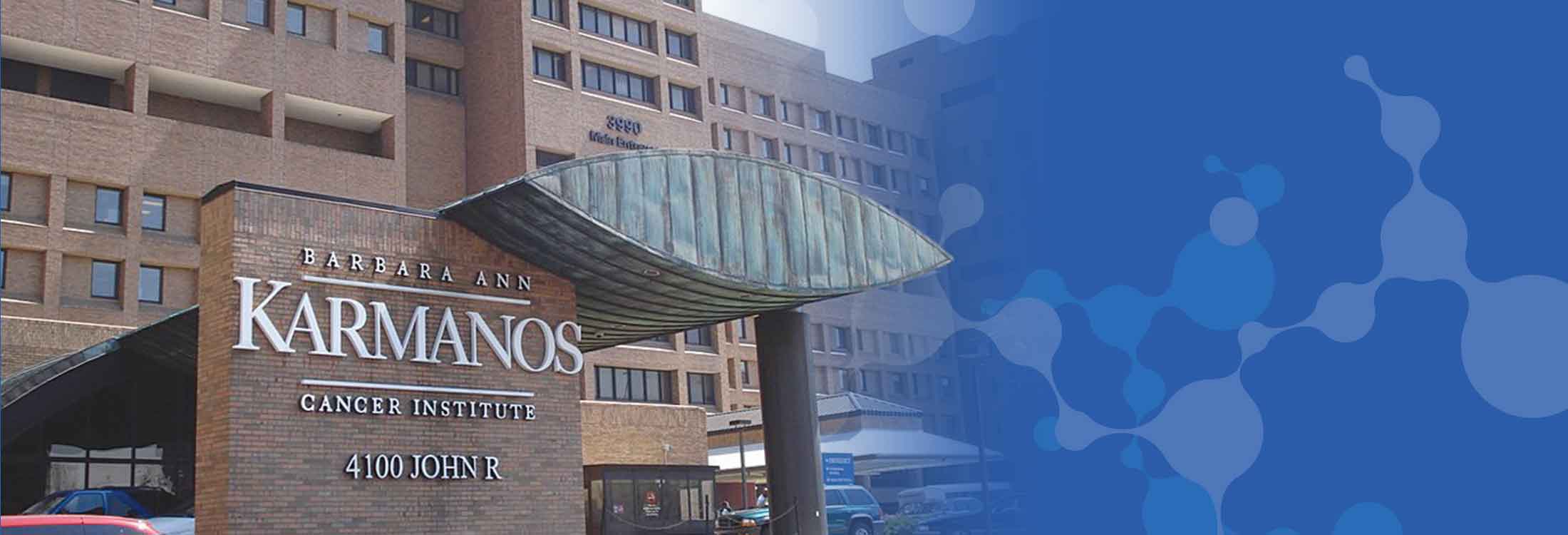
Detroit, MI and Atlanta, GA – Karmanos Cancer Institute is pleased to announce that it will begin using the OncoLens cancer treatment planning software platform to hold tumor boards and multidisciplinary case discussions. Implementing OncoLens will make it easier for providers to participate in multidisciplinary team discussions through a streamlined and accessible platform where members can review patient cases in real-time and asynchronously. Using this secure platform allows for the consolidation of clinical trial information, electronic medical records (EMR), images, lab results and other information into one environment. Follow up action items are recorded and can be managed through the platform.

Tumor boards are critical to Karmanos’ multidisciplinary approach. These treatment planning sessions allow specialty providers from many disciplines to discuss and plan treatment for patients. Participants include oncologists, radiation oncologists, radiologists, pathologists, surgeons, pharmacists, specialized nurse practitioners, dietitians, social workers and genetic counselors. By holding tumor board meetings, Karmanos offers access to a team of experts without requiring patients to see multiple specialists. Rather, patient cases are discussed in one setting, where each specialist can weigh in, providing the best possible expertise and patient treatment. With 16 locations in the Karmanos network, accessible collaboration is imperative.

Before the implementation of OncoLens, Karmanos held tumor boards in person or via conference call. While this allowed for effective communication, the use of OncoLens will enhance the process and efficiency by integrating EMR and other data to be shared seamlessly in real-time for all to review. Additionally, whether held online or in-person, tumor boards have previously required that all providers attend simultaneously. With the implementation of OncoLens, specialists can offer comments and feedback asynchronously and engage with other team members before or after the meeting.

The OncoLens platform provides clinical decision support to automatically match patients with potential clinical trials that are pulled from the study information portal, based on the specific cancer type and tumor characteristics.

The OncoLens platform enables system-wide treatment planning and standardization of care across a network that is consistent with evidence-based and customized care pathways. It allows peer-to-peer collaboration and instant reporting to provide perspective into testing and treatment recommendations, adherence to quality metrics and improvement opportunities.

“We have learned a great deal about the value and ease that can be facilitated by digital communication platforms during the COVID-19 pandemic. Even before this, Karmanos sought to remove communication barriers between our providers to offer the best cancer care possible to our patients. Thanks to the specialized offerings provided by OncoLens, multidisciplinary teams throughout the entire Karmanos system will be able to collaborate seamlessly and share information, whether they are stepping out of surgery, sitting at a desk or commuting to the clinic,” said Justin Klamerus, M.D., M.M.M., President of the Karmanos Cancer Hospital & Network.

“With OncoLens and Karmanos working together, we will drive increased care coordination among multi-specialty providers in the network and community, leading to better patient care and increased referrals. Each cancer patient’s case will be visualized by their care team and expert physicians at Karmanos, with the relevant clinical, imaging, genomic and other data, irrespective of location or busy schedules and tracked to Karmanos’ high-quality standards. We are excited to work with a partner like Karmanos that shares our mission to bring the best possible care to the patient,” said Anju Mathew, CEO and Co-Founder, OncoLens.

Since its founding, OncoLens has offered a platform that can easily aggregate patient-specific data in a HIPAA-compliant manner across different EMR/clinical/genetics information systems. In addition, patient-specific clinical trials at a facility or its affiliates, NCCN/ASCO guidelines and the latest research are automatically identified for each case to support the care team in making the best decision for the patient. For large healthcare networks and institutions like Karmanos, OncoLens provides an inter-connectivity tool that breaks down the silos of healthcare delivery.

OncoLens serves more than 8,000 cancer care providers across the country today, including those from NCI designated cancer centers, academic institutions, integrated delivery networks (IDN) and community cancer centers.

###

About OncoLens

OncoLens is a care treatment planning platform designed specifically to help cancer programs collaborate effectively with multidisciplinary teams across their care networks and within the affiliates and communities they serve. Our solutions include virtual tumor board technology, workflow automation, survivorship care planning, and clinical decision support capabilities that ultimately lead to increased standardization across the network, higher quality of care, enhanced engagement with affiliates, increased referrals, and reduced costs through greater efficiencies. For more information on OncoLens, please visit www.oncolens.com. Follow us on Facebook, Twitter, and LinkedIn.

About The Barbara Ann Karmanos Cancer Institute
Karmanos Cancer Institute is a leader in transformative cancer care, research and education through courage, commitment, and compassion. Our vision is a world free of cancer. As part of McLaren Health Care, Karmanos is the largest provider of cancer care and research in the state of Michigan. For more than 75 years, our administrative and research headquarters, along with our premier specialty cancer hospital, have been located in downtown Detroit. Our 15 network sites throughout the state deliver market-leading cancer care and clinical trials conveniently to the communities where many of our patients live. Karmanos is recognized by the National Cancer Institute as one of the best cancer centers in the nation. Our academic partnership with the Wayne State University School of Medicine provides the framework for cancer research and education – defining new standards of care and improving survivorship. For more information, call 1-800-KARMANOS (800-527-6266) or visit www.karmanos.org. Follow Karmanos on Facebook, Twitter, LinkedIn and YouTube.

Four Factors Affecting the Post-COVID Cancer Care Landscape

OncoLens CMO Lijo Simpson, MD, discusses the four factors impacting post-COVID cancer care in the Journal of AHIMA.

In this guest article, Dr. Simpson outlines the four forces that will continue to impact cancer care delivery in both the short and long term. And despite the negative impacts of the pandemic, he maintains that COVID-19 forced rapid and potentially positive changes in a healthcare system that is traditionally slow to change. As the pandemic recedes, these innovations in healthcare will likely have changed care delivery for the better.

Four Factors Affecting the Post‑COVID Cancer Care Landscape

4 minute read

Read the Full Article Here